
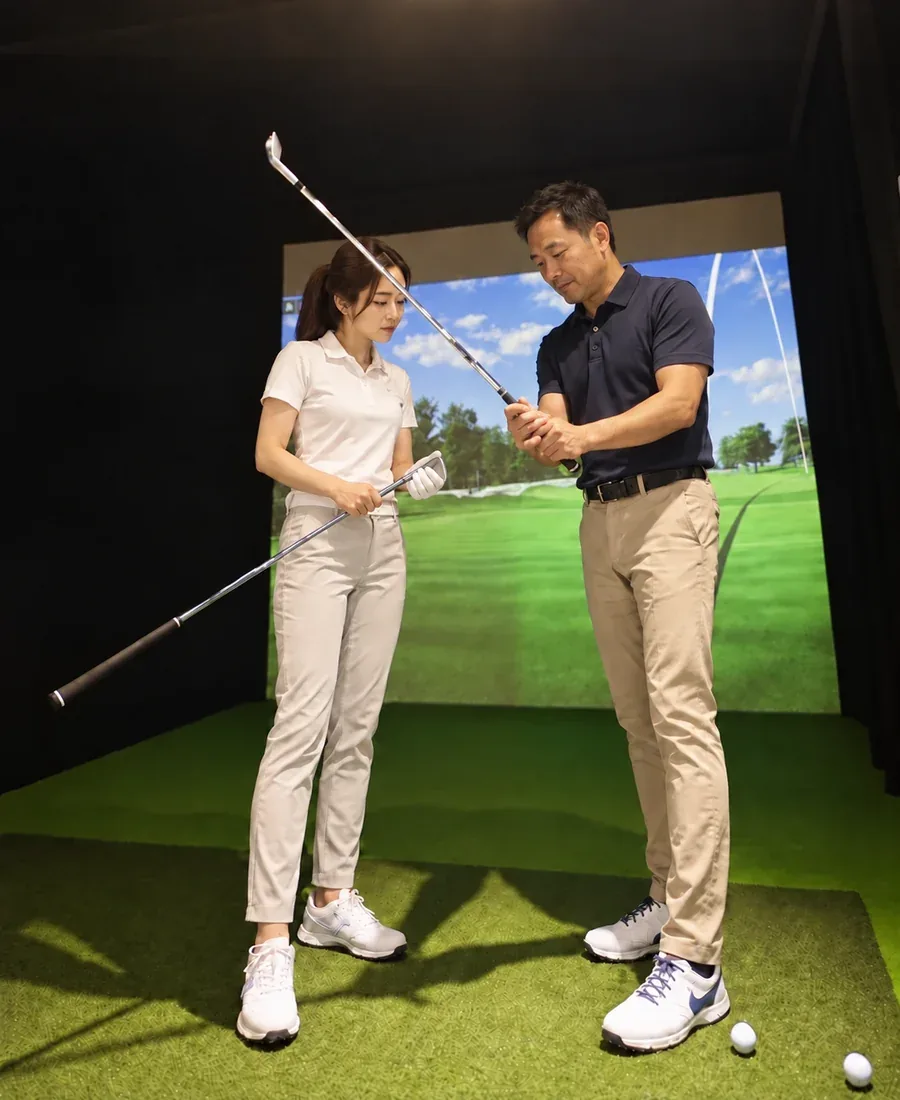
You can start golf without buying clubs or studying swing techniques and data. Choose somewhere that helps you understand the movements, arrive willing to learn and make time for practice.
At Smash Factor in Kwun Tong, Golf Foundations offers beginner golf lessons built around how your body moves. We connect that understanding to swinging and hitting the ball, starting at your level.
Choose where to learn: indoors or outdoors?
An outdoor range lets you watch the actual ball flight and experience wind and distance. Indoors, shot data, swing replay and your instructor’s explanation come together. For beginners who want to understand their movements and build from the basics, we recommend indoor lessons with reliable tracking and video feedback.
Seeing your swing makes instruction easier to follow
What you feel and what you do can differ. You might feel you have turned your body. Your instructor can pause the replay, show your movement and demonstrate what to try next.
Recording swings and shots connects what you felt, what you did and what happened to the ball, giving you a reference for practice. Outdoor instructors can use these tools too; what matters is how they help you understand the feedback.
Reliable feedback matters indoors
Indoors, you cannot watch the ball’s full flight. Misleading distance or direction readings could lead you to adjust your swing for the wrong reason. The tracking equipment, replay and how your instructor uses them all matter.
Every Smash Factor bay has Trackman 4 and dual-angle swing replay. Trackman 4 combines radar and camera technology to measure club and ball data. Trackman technology has a long history on professional tours, with the PGA TOUR extending its partnership through 2030. That experience informs our choice of equipment, alongside proper setup and thoughtful instruction.
What should you bring? Yourself and a willingness to learn
Golf Foundations lessons include clubs and bay rental. Wear comfortable clothes and trainers you can move in, and come ready to try. There is no need to buy equipment or study technical terms beforehand.
We introduce the swing and data as your lessons progress. Your first session focuses on understanding movements and experiencing contact with the ball.
Golf Foundations: build your swing through movement
Learning golf starts with movement foundations you can build on. Think of learning kung fu: stance, balance and coordination give you a basis for connecting movements. Golf Foundations takes that approach to learning a swing.
If you rush to hit the ball before understanding how to move, practice can become a series of small fixes after each poor shot. Repeating those compensations can turn movements that need work into habits. We want you to understand the purpose of each exercise from the beginning.
We break rotation, weight transfer and coordination into manageable exercises. Your instructor demonstrates and explains, then helps you feel pressure through your feet, body movement and how your muscles contribute. You gradually bring those movements into the swing. You do not need to be sporty already; these abilities can develop as you learn.
Your understanding of data grows with your lessons. We use selected feedback and video to connect changes in feeling with changes in the shot. There is no need to understand every number or chase professional players’ figures.
Understand, try and review the result. Each lesson gives you something clear to work on.
Learning golf is half lessons, half practice
Our teaching philosophy is simple: 50% lessons, 50% practice. Lessons help you understand the movement and find a direction. Practice turns that learning into skills you can use.
Understanding an explanation or getting a movement right a few times does not make it repeatable. Without practice between lessons, those movements are difficult to make your own. Leave room for practice when you commit to learning.
You do not need something new every session. Work on your instructor’s focus, check it occasionally with replay or relevant data, and bring questions to your next lesson. Your instructor can then adapt the teaching to what you find.
Preparing for a real course also means learning about turf, different lies, safety, etiquette and pace of play. Discuss your readiness with your instructor before arranging your first round.
How to start at Smash Factor
Golf Foundations welcomes golfers with little or no experience. Learn in English or Cantonese, individually or with one friend or partner. Membership is not required.
| What would you like to do? | Your starting option |
|---|---|
| Experience a lesson with an instructor | Golf Foundations trial: one hour, HK$1,200 total for one or two students, including teaching, bay rental and clubs. |
| See the studio and explore how to begin | Free 30-minute studio intro: an introduction and a chance to hit shots, separate from a full paid lesson. |
The trial does not include future practice sessions or ongoing access benefits. Eligible lesson-pass holders can book practice under their pass terms, with practice charged separately. See lesson and practice prices.
Bring your willingness to learn. Start with one lesson. Tell us your preferred days and times, and whether you are coming alone or with a partner. We can help arrange a trial.
Explore beginner golf lessons at Smash Factor
Prefer to see the studio first? Book your free intro. Both options are by appointment.